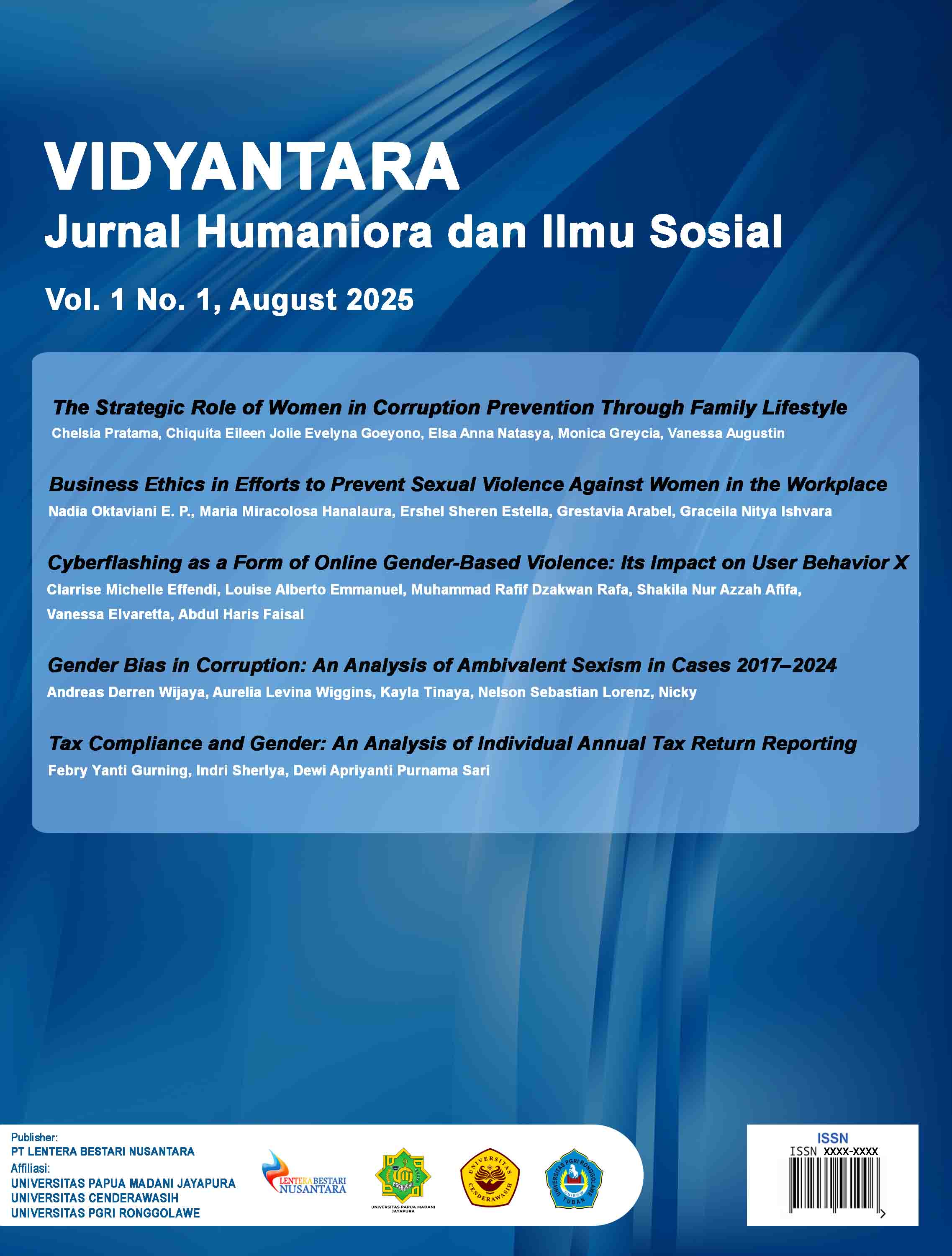
The Strategic Role of Women in Corruption Prevention Through Family Lifestyle
Keywords:
role of women, corruption prevention, moral education, life styleAbstract
Corruption is one of the serious problems that hinders development and damages the social structure in Indonesia. In efforts to prevent corruption, women are considered to have great potential through moral and ethical approaches and their strategic role in the family and society. This study aims to analyze women's contributions to corruption prevention efforts and their involvement in social and institutional environments. The method used is a descriptive qualitative study with a literature review approach from various sources, scientific journals, and secondary data related to the role of women and the eradication of corruption. The results of the study show that women, especially housewives, educators, and women's organization activists, have a significant influence in shaping the character of the younger generation to be anti-corruption through education on the values of honesty and integrity from an early age. Additionally, women's active participation in government institutions and public oversight further strengthens the corruption prevention system. The study concludes that empowering women in educational, social, and political aspects is essential as a long-term strategy to foster an anti-corruption culture in society.
References
Braun, V., & Clarke, V. (2006). Using thematic analysis in psychology. Qualitative Research in Psychology, 3(2), 77-101.
Bryman, A. (2016). Social research methods (5th ed.). Oxford University Press.
Creswell, J. W., & Poth, C. N. (2018). Qualitative inquiry and research design: Choosing among five approaches (4th ed.). Sage.
Denzin, N. K., & Lincoln, Y. S. (2018). The SAGE handbook of qualitative research (5th ed.). Sage.
Hengki, I. G. B. H., Kariyasa, I. M., & Lestari, A. A. A. (2021). Peran Perempuan dalam Pemberantasan Tindak Pidana Korupsi Melalui Preventif Normatif Yuridis. Jurnal Analisis Hukum, 4(1), 34-47.
Hidayat, A. (2023). Penelitian kualitatif (metode): Penjelasan lengkap. Statistikian. https://www.statistikian.com/2012/10/penelitian-kualitatif.html
Johnson, A. & Smith, B. (2022). Gender Performativity and Corruption Vulnerability. Journal of Economic Behavior, 45(3), 112-129.
Kementerian Pemberdayaan Perempuan dan Perlindungan Anak. (2023, 31 Maret). Lindungi perempuan dan anak dari dampak praktik korupsi. https://www.kemenpppa.go.id/page/view/NDQ3#
Komisi Pemberantasan Korupsi. (2024, 19 Desember). Kinerja KPK 2020-2024: Tangani 2.730 perkara korupsi, lima sektor jadi fokus utama. https://www.kpk.go.id/id/ruang-informasi/berita/kinerja-kpk-2020-2024-tangani-2730-perkara-korupsi-lima-sektor-jadi-fokus-utama
Nurhayati, D. (2022). Family Communication Patterns and Corruption Vulnerability. Journal of Family Studies, 18(1), 78-92.
Nurhasanah, A. (2024, 29 Agustus). Definisi kualitatif deskriptif menurut para ahli. RedaSamudera.id. https://redasamudera.id/definisi-kualitatif-deskriptif-menurut-para-ahli/
OECD (2022). Women's Empowerment as Anti-Corruption Strategy. Paris: OECD Publishing.
Pristiandaru, D. L. (2023, 10 Mei). Mengenal tujuan 5 SDGs: Kesetaraan gender. Kompas. https://lestari.kompas.com/read/2023/05/10/080501386/mengenal-tujuan-5-sdgs-kesetaraan-gender
Putra, A. & Febriani, R. (2024). Analisis Kasus Korupsi Berbasis Keluarga: Studi Kasus Gratifikasi Pejabat Pajak. Jurnal Kriminologi Indonesia, 15(1), 112-128.
Putri, D. (2021). Korupsi dan perilaku koruptif. Tarbiyah Bil Qalam: Jurnal Pendidikan Agama dan Sains, 5(2), 45-60.
Sayyaf, R. T. F., & Robbie, R. I. (2021). Implikasi religiusitas, gaya hidup hedonis, dan gaji terhadap ketahanan keluarga. Value: Jurnal Manajemen dan Akuntansi, 16(1), 279-286.
Siregar, A., et al. (2022). Materialisme dan Kerentanan Perilaku Koruptif: Analisis Sosiologis. Jurnal Antropologi Sosial, 8(1), 78-95.
Sinaga, F. (2025, 6 Maret). KPK ungkap aliran uang Direktur Summarecon ke pejabat pajak soal gratifikasi Rp21,5 M. JPNN.com. https://www.jpnn.com/news/kpk-ungkap-aliran-uang-direktur-summarecon-ke-pejabat-pajak-soal-gratifikasi-rp215-m
Transparency International (2023). Global Corruption Barometer. Berlin: TI Secretariat.
United Nations. (2015). Sustainable Development Goals (SDGs). Diakses dari https://sdgs.un.org/goals
Widiantana, I. K., Sentana, G. D. D., & Perbowosari, H. (2022). Peningkatan SDM Wanita Hindu Melalui Pengabdian Masyarakat Pemberdayaan Perempuan Anti Korupsi. Sevanam: Jurnal Pengabdian Masyarakat, 1(01), 36-44.
Winati, R., Nataleni, L. S., Cristy, N., & Sarmauli, S. (2024). Studi gender: Perempuan dan anti korupsi. Mushaf Journal: Jurnal Ilmu Al Quran dan Hadis, 4(3), 431-442.
Downloads
Published
Issue
Section
License
Copyright (c) 2025 VIDYANTARA: Jurnal Humaniora dan Ilmu Sosial

This work is licensed under a Creative Commons Attribution-NonCommercial 4.0 International License.
 Focus & Scope
 Editorial Team
 Reviewer Team
 Author Guidelines
 Article Template
 Author Fee
 Publication Ethics
 Plagiarism Policy
 Open Access Policy
 Peer Review Process
 Copyright and License
 Submission
 Archiving & Repository
 Contact